2017 Ford Escape Owner’s Guide
Owner-to-owner help for the questions that come up when you own or shop for a 2017 Escape: reliability, common problems, recalls, S, SE and Titanium differences, maintenance, specs and more.
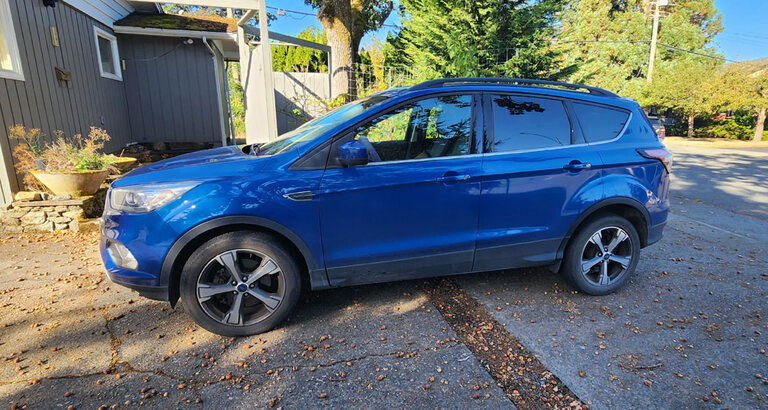
Hi, I’m Don. Our family owns and drives a blue 2017 Ford Escape SE with the 1.5L EcoBoost. We call her Alice. I built this site to keep the things I learn about Alice in one place so other 2017 Escape owners can find them too.
What do you need help with?
Start with the kind of question you have, then follow the related guides for more detail.
Problems & reliability
Known problem areas, engine-specific reliability concerns, warning signs, transmission behavior and check-engine codes.
See problem guides →Maintenance
Oil, filters, brakes, spark plugs, fluids, tires and the maintenance jobs that keep an Escape going.
See maintenance guides →Specs & models
S, SE and Titanium differences, engine choices, wheel specs, dimensions, towing and fuel economy.
See specs & trims →Recalls & buying
How to check recall status, what to look for on a used Escape and the ownership costs to plan for.
Check recall & buying guides →Flagship 2017 Ford Escape guides
These pages cover the questions I would research first when owning or shopping for a 2017 Escape.
2017 Escape reliability
Engine-specific concerns, ownership notes and what I would check before buying.
Common problems
Cooling, transmission, electrical, HVAC and other issues owners may run into.
2017 Escape recalls
Key campaigns, current VIN-check links and how recalls differ from service bulletins.
2017 Ford Escape S
2.5L engine, FWD, simpler equipment, reliability notes and used-buying checks.
2017 Ford Escape SE
Engines, FWD/AWD, features, reliability notes and a real-owner perspective from Alice.
2017 Ford Escape Titanium
Engines, premium equipment, known concerns and what to test on a used Titanium.
S vs SE vs Titanium
Compare the three 2017 trims and decide which configuration makes the most sense.
Specific 2017 Ford Escape questions
These shorter guides are built around the exact maintenance, specification and troubleshooting questions owners often need answered quickly.
Misfire codes P0300-P0304
What cylinder-specific codes mean and when coolant loss changes the diagnosis.
P0299 turbo underboost
Underboost symptoms and what to check before assuming the turbocharger has failed.
Liftgate won’t open
Manual and power liftgate clues, latch symptoms and Ford fuse references.
Remote start not working
Ford's hood, Park, battery-voltage and Service Engine Soon conditions.
Rear wiper not working
F42, reverse-wipe behaviour, washer clues and motor diagnosis context.
Heater blowing cold air
Separate no-airflow, low-coolant, thermostat and HVAC temperature-control symptoms.
Oil life reset
Ford's reset sequence and what to check if the maintenance reminder will not clear.
Fuse box diagram & locations
Where the fuse panels are and common fuse references for A/C, radio, wipers, outlets and more.
Warning lights & messages
Start with urgency, then follow the dashboard message to the right system guide.
Horn not working
F20, R2 and what the symptom can tell you before replacing parts.
Washer not working
Front vs rear clues, washer-pump fuses, freezing and delivery problems.
Heated seat not working
Separate driver, passenger and shared electrical symptoms.
Power seat not moving
One-direction vs whole-seat failures, Ford seat fuses and what worked on Alice.
Parking sensors not working
Park Aid faults, F29/F30, blocked sensors and camera-vs-sensor clues.
Rear defroster not working
Ford fuse/relay references, partial grid failures and heated-mirror behavior.
Door lock not working
One door vs all doors, remote-vs-switch clues and Ford lock circuits.
Parking brake warning
Flashing brake lamp, release problems and low-battery EPB clues.
12V power outlet not working
Ford fuse references for front, center and cargo-area power points.
Wheel torque specs
Official Ford lug-nut torque, fastener size and retorque note.
Cabin air filter
Ford's replacement interval, location, symptoms and filter choices.
Gas tank size
Fuel capacity in gallons and litres for all three 2017 Escape engines.
Wiper blade sizes
Front and rear sizes, service-position notes and fitment tips.
A/C not working
Separate weak airflow, warm air and intermittent cooling before guessing at parts.
A/C compressor not turning on
F27, R11, warm-air symptoms and why a non-engaging clutch does not automatically mean a failed compressor.
Blower motor problems
No airflow, weak airflow, F10/R13 references and when the motor may not be the real problem.
Cooling fan not working
Cooling-fan fuses and relays, overheating-at-idle clues and A/C symptoms while stopped.
Brake & tail light assembly
Ford's LED tail/brake lamp, rear bulb chart and how to identify which part of the lamp has failed.
Auto Start-Stop
Why it can be unavailable, how the battery matters and what Ford's messages mean.
Door keypad code
Owner-authorized personal-code programming using the factory SecuriCode.
EVAP purge valve
Symptoms, codes and the Ford TSB that applies to some 2017 EcoBoost Escapes.
Rear brakes & EPB
What the electronic parking brake changes about rear pad service and maintenance mode.
Transmission fluid
MERCON LV specification, 6F35 identification and the difference between dry capacity and service fill.
Coolant type & capacity
Ford's coolant specification and published capacity for all three 2017 Escape engines.
Headlight bulb sizes
Official Ford bulb chart for halogen, HID, fog, turn and backup lamps.
Key fob battery
The official CR2032 battery size and what Ford says about key programming.
P1450 code
What Ford means by Unable to Bleed Up Fuel Tank Vacuum and why it does not automatically name one failed part.
Backup camera not working
Black screen, dirty lens, F29 fuse, missing guidelines and camera-versus-SYNC clues.
SYNC & radio reset
Ford's system reset versus master reset, including what each one erases.
Spark plug gap & specs
Official Ford gap ranges for the 1.5L, 2.0L and 2.5L plus the scheduled replacement interval.
Serpentine belt routing
Ford drive-belt routing by engine, inspection interval and the separate 1.5L timing-belt item.
Lug nut size
Official M12 x 1.5 thread size, wheel torque context and replacement-hardware notes.
Thermostat symptoms
Slow warm-up, weak heat, P0128 context, overheating and how to separate thermostat clues from coolant or fan problems.
Key fob not working
Weak range, No Key Detected, remote-start conditions and what to check when a fresh CR2032 does not solve it.
Coolant intrusion & coolant loss
Ford's 1.5L and 2.0L EcoBoost service bulletins, symptoms and what owners should document.
Tire pressure & TPMS
Where to find the correct cold pressure and how Ford's low-pressure, monitor-fault and sensor-fault messages differ.
Find a 2017 Ford Escape topic
Browse maintenance, specifications, model information and troubleshooting without digging through a generic vehicle database.
Maintenance
- Oil type & capacity
- Oil change guide
- Oil life reset
- Engine & cabin filters
- Cabin air filter
- Brakes, pads & rotors
- Rear brakes & electronic parking brake
- Electronic parking brake warning
- Tire sizes
- Tire pressure & TPMS
- Wiper blade sizes
- Rear wiper not working
- Windshield washer not working
- Battery & charging
- Fuse box & common fuses
- Fluids & capacities
- Coolant type & capacity
- Transmission fluid
- Service intervals
- Spark plugs
- Serpentine belt & routing
Specs & models
- S, SE & Titanium comparison
- 2017 Ford Escape SE
- 2017 Ford Escape Titanium
- 2.5L, 1.5L & 2.0L engines
- Wheels & bolt pattern
- Wheel torque specs
- Lug nut size
- Gas tank size
- Dimensions & cargo
- Towing & payload
- Fuel economy
- SYNC 3 & infotainment
- Lighting & bulbs
- Headlight bulb sizes
- Brake & tail light assembly
- Safety & airbags
- Ford Escape generations
- 2013-2019 third-generation guide
- 2013-2019 problems by year
- 2013-2019 shifter-cable-bushing recall
Problems & ownership
- Common problems
- Coolant intrusion & coolant loss
- Reliability
- Recalls & TSBs
- Check-engine codes
- Transmission behavior
- Electrical issues
- Horn not working
- Heated seat not working
- Power seat not working
- Parking sensors not working
- Rear defroster & heated mirrors
- Door lock not working
- A/C not working
- Heater not working
- A/C compressor not turning on
- Blower motor problems
- Cooling fan not working
- Thermostat symptoms
- Auto Start-Stop
- EVAP purge valve
- P1450 code
- Backup camera not working
- SYNC & radio reset
- Door keypad code
- Key fob battery
- Key fob not working
- Remote start not working
- Interior fixes
- Winter driving & prep
- Accessories
- Ownership costs
- Owner tools
Fuel economy converter
Convert MPG, L/100 km and km/L when comparing Canadian and U.S. fuel-economy figures.
Type in any one box and the rest update automatically. Tip: Lower L/100km is better; higher mpg and km/L are better.